Research
We investigate why some people develop Alzheimer’s disease (AD) while others remain cognitively resilient—and how to detect risk earlier with minimally invasive tests. Our work sits at the interface of genetic epidemiology and translational biomarker research, leveraging deeply phenotyped cohorts, modern biobanking, and large international consortia.
Genetic architecture of Alzheimer’s
We map common and rare genetic contributors to AD across large cohorts and meta-analyses (e.g., EADB), moving beyond single variants to pathway-level insights and polygenic risk. Alongside short-read sequencing, we increasingly deploy long-read and structural-variant aware approaches to capture signals missed by standard pipelines.
Early, non-invasive biomarkers
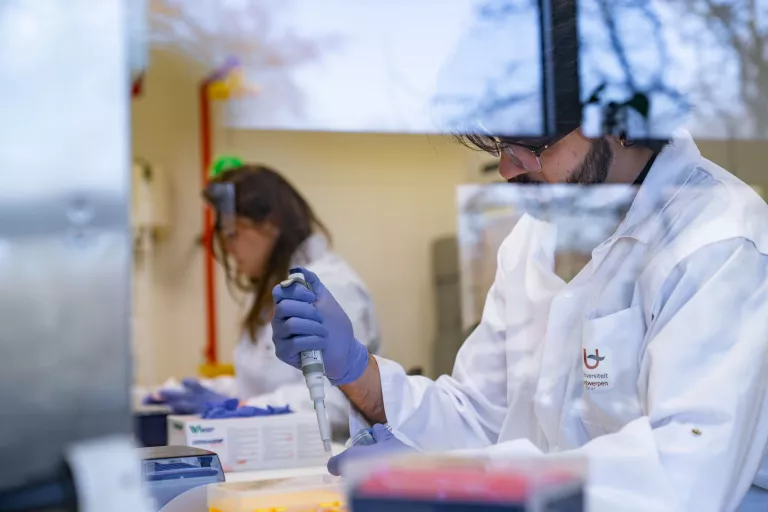
We develop and benchmark liquid-biopsy biomarkers that could shift diagnosis from spinal taps and PET to blood and other low-burden fluids (including tear fluid). Using short- and long-read sequencing, we profile extracellular RNA (linear and circular) and DNA—including methylation signatures—to discover molecular fingerprints of the earliest brain changes.
Healthy aging & resilience
Through the longitudinal 1,000 Healthy Elderly study and memory-clinic networks (e.g., BELNEU), we chart trajectories of cognitive aging. By integrating genomics with immune, lipid and proteomic measures and real-world exposures, we aim to distinguish normative aging from incipient neurodegeneration and identify modifiers of risk and resilience.
Risk stratification & translation
We combine genetics and biomarkers into stratification tools for earlier, more precise triage in the clinic. With clinical partners, we validate candidate markers in prospective settings and contribute to communication frameworks and training for first-line care, helping translate research signals into practical guidance.
Cohorts, biobanking & collaboration
Our studies are enabled by a modern, compliant biobank and close ties to core facilities and CMN labs. We design studies with re-use and validation in mind, and we actively contribute data, methods, and leadership to international collaborations that accelerate discovery and de-risk translation.
Publication highlights

The impact of rare genetic variants on Alzheimer disease
Lara De Deyn & Kristel Sleegers
This review synthesizes how rare variants across at least 13 genes materially shape Alzheimer’s disease risk—estimating ~1 in 5 early-onset and ~1 in 7 late-onset cases carry a rare risk variant—and shows how these findings illuminate pathways and seed precision-medicine trials. It also distills clinical implications for sequencing, interpretation, and disclosure, positioning rare-variant genetics as a cornerstone for next-generation AD diagnostics and therapeutics.
Deciphering a Single-cell atlas and loss-of-function analysis revealing ABCA7’s transcriptome insights in Alzheimer’s disease
Lara De Deyn, Lena Duchateau, Tijs Watzeels, Cristina Vicente, Jasper Van Dongen, Baukje Bijnens, Tim De Pooter, Peter De Rijk, Mojca Strazisar, Wim Vandenberghe, Dietmar Rudolf Thal, Renzo Mancuso, Rosa Rademakers, Fahri Küçükali, Kristel Sleegers
This study builds a single-cell atlas around ABCA7 and pairs it with loss-of-function experiments to reveal cell-type–specific pathways, especially immune and lipid-metabolism programs, that are perturbed in Alzheimer’s disease. By clarifying how ABCA7 dysfunction reshapes microglial/immune networks, it strengthens the mechanistic link between ABCA7 risk variants and AD pathogenesis and highlights targets and biomarkers for follow-up.

Genetic associations between modifiable risk factors and Alzheimer disease
European Alzheimer’s & Dementia Biobank Mendelian Randomization (EADB-MR) Collaboration

New insights into the genetic etiology of Alzheimer’s disease and related dementias
Bellenguez et al.
This landmark meta-analysis (EADB & partners) delivers the largest Alzheimer’s GWAS to date, identifying 75 risk loci — 42 novel — and prioritizing causal genes that converge on microglial biology, endolysosomal trafficking, lipid metabolism, and amyloid–tau pathways. The work sharpens targets for functional follow-up and improves polygenic risk stratification, directly informing our lab’s genetic epidemiology and biomarker programs.
Consortia and (inter)national collaborations we're part of